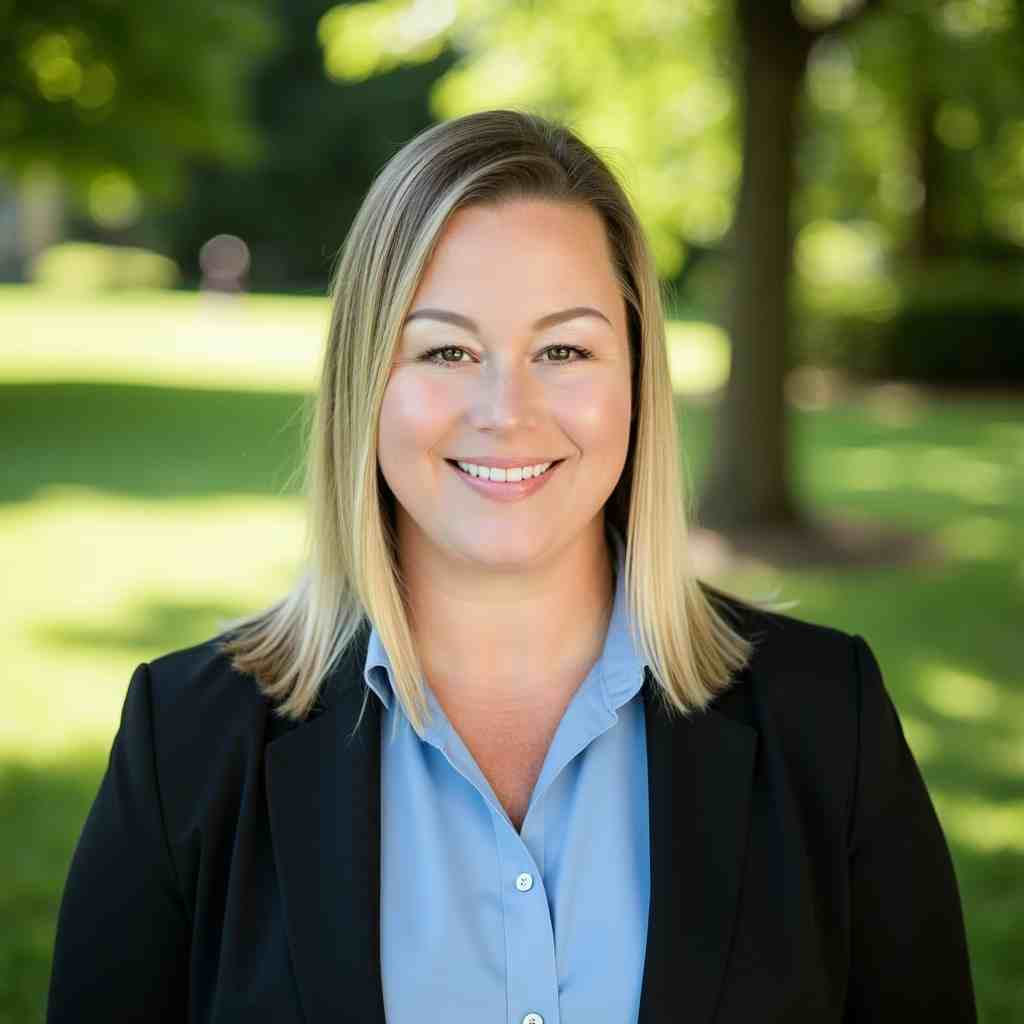
Patty works with trusted local lenders who know the Southwest Florida market. Each one is vetted, responsive, and committed to getting her clients to the closing table.
Julie Scott
Movement Mortgage
Julie brings deep Southwest Florida market knowledge and a client-first approach to every loan. With years of experience helping buyers in Cape Coral and Fort Myers, she's a trusted partner from pre-approval to closing.
Eduardo is a bilingual lending specialist fluent in English and Spanish, making him an invaluable resource for the diverse Southwest Florida community. He's known for clear communication and finding creative solutions for every buyer's situation.
Angela specializes in wholesale mortgage lending, which means her clients often access better rates than traditional retail lenders can offer. She's licensed in Florida and brings a straightforward, no-surprise approach to the lending process.
Buying a home comes with a lot of new vocabulary. Here's a plain-English guide to the terms you'll encounter — including some Florida-specific ones that catch out-of-state buyers off guard.
Basic Mortgage Terms
The APR reflects the true annual cost of your loan, including interest and fees. It's always slightly higher than the interest rate and is the best number to use when comparing loan offers from different lenders.
Amortization is the process of paying off your loan over time through regular monthly payments. In the early years of your mortgage, most of your payment goes toward interest. Over time, more goes toward principal. Your lender can provide a full amortization schedule showing exactly how each payment breaks down.
Escrow has two meanings in real estate. During the purchase process, your earnest money deposit is held in escrow by a neutral third party until closing. After closing, your lender may set up an escrow account to collect a portion of your property taxes and insurance premiums each month, then pay those bills on your behalf when they're due.
If your down payment is less than 20% on a conventional loan, your lender will require PMI. This is an additional monthly cost that protects the lender — not you — in case you default. Once you've built 20% equity in the home, you can typically request to have PMI removed.
Your DTI is the percentage of your gross monthly income that goes toward debt payments, including your future mortgage. Most lenders prefer a DTI of 43% or lower. The lower your DTI, the stronger your loan application.
Pre-qualification is a quick, informal estimate of what you might be able to borrow based on self-reported information. Pre-approval is a more formal process where the lender verifies your income, assets, and credit. In a competitive market like Southwest Florida, sellers expect to see a pre-approval letter — not just a pre-qualification.
Types of Home Loans
A conventional loan is not backed by a government agency. These loans typically require a higher credit score and a larger down payment (as little as 3% for qualified buyers), but they offer more flexibility in terms of property type and loan amount. Conventional loans are the most common choice for buyers with strong credit.
Backed by the Federal Housing Administration, FHA loans are popular with first-time buyers because they allow down payments as low as 3.5% and are more flexible on credit scores. FHA loans do require mortgage insurance for the life of the loan in most cases. Some new construction builders — including LGI Homes — offer promotional FHA rates that can make buying a brand-new home surprisingly affordable.
VA loans are available to eligible veterans, active-duty service members, and surviving spouses. They require no down payment, no PMI, and typically offer competitive interest rates. Southwest Florida has a significant military and veteran population, making VA loans a common and powerful option in this market.
An ARM starts with a fixed interest rate for an initial period (typically 5, 7, or 10 years), then adjusts periodically based on market conditions. ARMs can offer lower initial payments but carry the risk of rising payments over time. They can make sense for buyers who plan to sell or refinance before the adjustment period begins.
Florida-Specific Terms
Florida's homestead exemption reduces the taxable value of your primary residence by up to $50,000, which can meaningfully lower your annual property tax bill. To qualify, you must own the home and make it your permanent residence as of January 1st of the tax year. Out-of-state buyers are often surprised by how much this saves — make sure you apply in the first year you move in.
Many properties in Southwest Florida — especially in Cape Coral and Fort Myers — are in FEMA-designated flood zones. If your home is in a high-risk zone, your lender will require flood insurance in addition to standard homeowners insurance. Flood insurance is separate from your homeowners policy and is typically purchased through the National Flood Insurance Program (NFIP) or a private carrier. Always check a property's flood zone designation before making an offer.
A wind mitigation inspection assesses how well a home can withstand hurricane-force winds. Florida insurers are required to offer discounts based on wind mitigation features like impact windows, reinforced roof connections, and hurricane shutters. Getting a wind mitigation report — typically $75–$150 — can save you hundreds of dollars per year on your insurance premium.
Cape Coral has one of the largest canal systems in the world. Waterfront properties may have seawalls that require maintenance or replacement — a cost that falls on the homeowner. Always inspect the seawall condition as part of your due diligence on a waterfront purchase. Some properties may also have outstanding or upcoming special assessments related to the city's utility expansion projects.
The Closing Process
When you make an offer on a home, you'll typically submit an earnest money deposit — usually 1–3% of the purchase price — to show the seller you're serious. This money is held in escrow and applied toward your down payment or closing costs at closing. If you back out of the deal without a valid contingency, you may forfeit the deposit.
Closing costs are fees paid at the end of the transaction, typically ranging from 2–5% of the loan amount. They include lender fees, title insurance, appraisal, prepaid taxes and insurance, and more. In Florida, buyers and sellers each pay certain closing costs — your lender will provide a Loan Estimate early in the process so there are no surprises.
"Clear to Close" means your lender has completed their review, all conditions have been met, and you are approved to proceed to closing. This is one of the most exciting phrases you'll hear during the home buying process. Once you receive CTC, your closing date is typically just a few days away.
Title insurance protects you and your lender against any claims or disputes over ownership of the property. In Florida, it's standard practice for the seller to pay for the owner's title insurance policy. Your lender will also require a separate lender's title policy. Patty works with trusted local title companies — including Townsend Title and Fidelity National Title — to ensure a smooth closing.
New Construction & Builder Terms
New construction builders often offer incentives to attract buyers, including closing cost contributions, free upgrades, and — most notably — below-market mortgage rates through their in-house or preferred lenders. These rate buydowns are paid for by the builder and can result in significantly lower monthly payments. Always compare the builder's rate offer against what your own lender can provide.
LGI Homes is one of the most active new construction builders in Southwest Florida, with communities in Cape Coral and surrounding areas. LGI frequently runs promotional FHA financing offers — currently as low as 3.99% — making homeownership more accessible for first-time and move-up buyers. These rates are subject to change and qualification requirements apply. Interested in an LGI community? Contact Patty for details on current availability and promotions.
When you visit a new construction community, the on-site sales agent works for the builder — not for you. Having your own buyer's agent costs you nothing (the builder pays the commission) and gives you an advocate who can review the contract, negotiate upgrades, and guide you through the process with your interests in mind. Always bring your agent on your first visit, as some builders require agent registration at that initial appointment.
If you're building a custom home, a construction-to-permanent loan (also called a C2P or one-time-close loan) finances the construction phase and then automatically converts to a regular mortgage once the home is complete. This saves you from having to apply for two separate loans and go through closing twice.
Florida offers several down payment assistance programs for first-time and income-qualified buyers, including the Florida Housing Finance Corporation's programs which provide low-interest loans or grants to cover down payment and closing costs. Lee County and Cape Coral also periodically offer local assistance programs. Ask Patty's preferred lenders about current programs you may qualify for — many buyers are surprised to learn they don't need as much cash upfront as they thought.